
South Riding Resident Lookup Records
A one-person search should answer one narrow question at a time. The South Riding parcel roll can tie a person or entity to a parcel and show a situs and tax-mailing address, while the deed index documents a recorded transaction. Court systems identify a party and case activity, not a current address. Vital records can confirm an event when the requester meets the access rule. Voter status is a controlled individual route, not a public block list. Keep the record type, date, and any limits with the result so a South Riding name is not turned into more than the source can support.
| Record | What It Confirms | Where | Access |
|---|---|---|---|
| Parcel assessment | Owner or taxpayer, situs and mailing fields, legal description | Loudoun Real Property Search | Free public search; data update weekly |
| Recorded deed or plat | Grantor, grantee, legal lot or section, and recorded chain | Loudoun PAX | Index access; images may require payment or a kiosk |
| Voter status | Individual registration, status, precinct, and related voter information | Virginia Voter Information | Individual route; list products are controlled |
| Court docket | Named party, case activity, hearing, and disposition | Virginia court portals | Online docket access; files and copies follow clerk rules |
| Vital record | Recorded birth, death, marriage, or divorce event | Loudoun vital-record services | Certified access and public-opening rules apply |
| Probate record | Estate or fiduciary matter, where public | Loudoun Circuit Clerk and Historic Records | Confidentiality and clerk procedures apply |
Start with the record that matches the fact already known. A South Riding address or parcel number points first to the assessment roll. A case number belongs in the court system. A family event belongs with the appropriate vital custodian. One record can be a useful lead, but the search needs at least two independent anchors before a same-name match is treated as the same person.
South Riding Court Name Search
South Riding is served by Loudoun Circuit Court, Loudoun General District Court, and Loudoun Juvenile and Domestic Relations District Court. There is no South Riding municipal court. For a South Riding Circuit search, select Loudoun Circuit, choose Civil or Criminal, then use Name, Case Number, or Hearing Date. The General District route requires a selected court and permits plaintiff or defendant name, case number, or hearing-date searching. A state case hub helps route a search, but it does not make every locality into one combined circuit-name database.
The public court result is a case record, not an identity conclusion. For a South Riding party match, compare the role, date, and context with a separate record. Sensitive categories, sealed matters, juvenile files, adoption files, and expunged filings may be absent. A docket hit is not a finding of guilt. Read the case type and final disposition, and ask the Clerk about a file or copy when the online result does not include the document.
The official Virginia Circuit Court search is the source shown here.
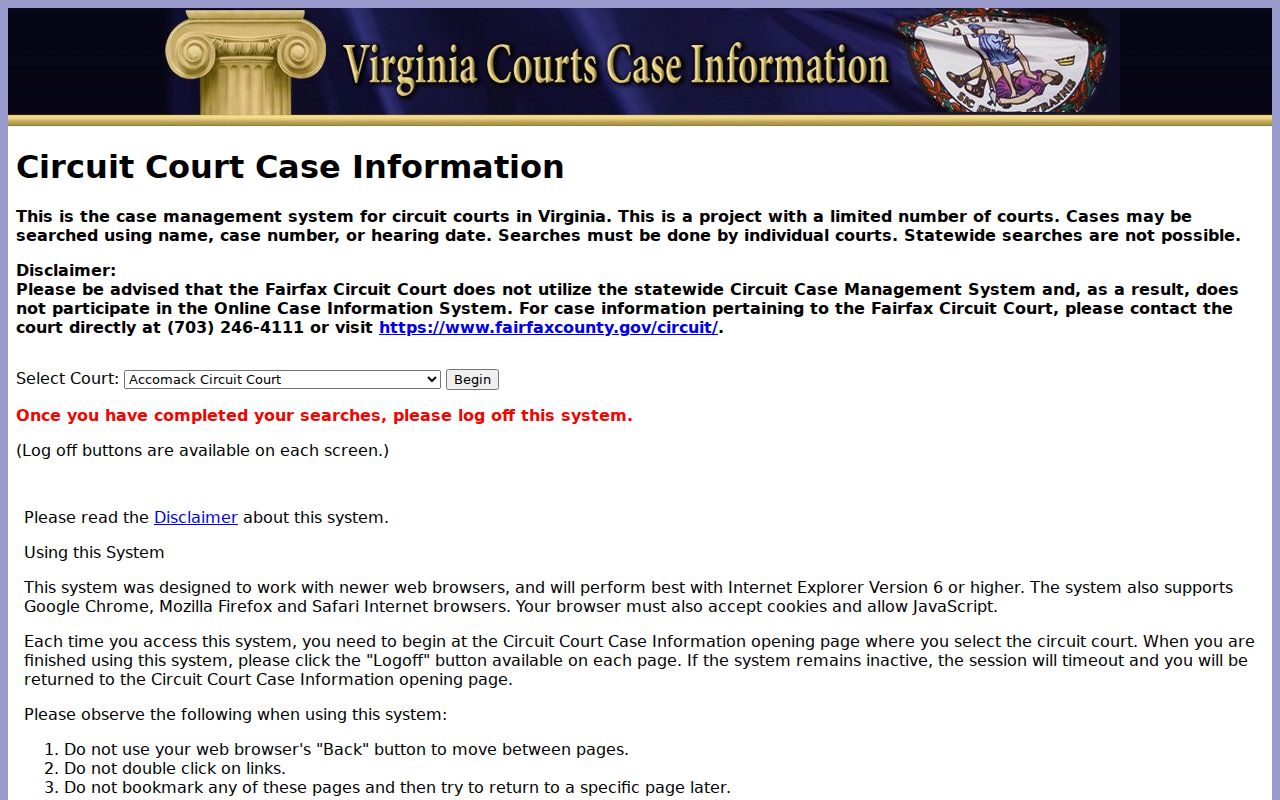
Selecting the correct Loudoun court is the first safeguard against treating a statewide route as a local result.
For a Circuit Case Details result, preserve the actual fields rather than a loose summary:
| Result field | What it records |
|---|---|
| Party information | The people or entities named in the case |
| Hearings | Date, courtroom, and judge |
| Final result | Disposition, judgment or final-order date, and “concluded by” |
| Pleadings/Orders | Filed date, type, party, judge, book, page, and remarks metadata |
Lobby public terminals may show scanned files without charge, while printing or purchase runs through the Clerk. Loudoun General District local rules describe written requests for physical files and the initial review process.
Confirming a South Riding Resident
Work from the least-sensitive record that can answer the question. Normalize every form of the name first: middle initial, suffix, maiden or married form, trust spelling, and punctuation variant. PAX indexing changes by era, court names may follow a citation or summons, and a voter record uses a legal registration name. Then separate the address types. A South Riding parcel situs address, tax mailing address, business address, and historic directory address can each describe a different role. The goal is to test a match, not to build a broad profile.
- Search the parcel by street address or PIN and record the legal description, situs address, mailing address, subdivision, and source date.
- Use the recorded legal description or current party name in PAX, then compare the grantee, grantor, recording date, instrument identifier, and lot or section.
- Check the appropriate Loudoun court route for the name and its variants. Retain the court selected, case number, search date, and disposition label.
- Use a vital or archive source only when it fits the question and access rule. A family event, obituary, cemetery result, or probate item can support a relationship, but it is not an address guarantee.
- Accept a match only after two independent anchors agree, such as the same parcel plus deed or a court name plus matching address and age context.
- Docket
- A court’s running case entry, showing events and status rather than a complete identity record.
- Index
- A searchable pointer to a record, often listing names, dates, or identifiers without every underlying page.
- Image
- A scan of the filed or recorded page. PAX image access can differ from free index access.
- Certified copy
- A custodian-issued copy with certification. It is a different product from a search result or ordinary scan.
For an older address trail, the deed chain and historical collections provide a better route than repeated broad name searching. The South Riding Directory Book is the appropriate companion when a historical directory lead needs its own collection context.
South Riding Vital Record Boundaries
Virginia treats vital records as specific products with specific access rules. Birth records become public after 100 years, while death, marriage, and divorce records become public after 25 years. Before those periods, certified copies are limited to the named person or eligible immediate family and guardian categories with valid identification. South Riding family research may require Loudoun and Virginia Department of Health routes for the same event. A Loudoun marriage-license copy, a statewide certificate, and a Circuit court file are not interchangeable requests.
The research records a $15 charge per certificate, copy, or search at the county service, including a no-record search, subject to the current rules. It also notes conflicting official processing statements, so neither online nor paper timing should be treated as a promise. An obituary or cemetery result can support a South Riding family-history lead, but it cannot replace a certified record. For pre-registration periods, use church, cemetery, probate, deed, court, and archival material instead.
Request the narrowest item needed and keep a no-record result as an outcome. Virginia vital-record forms show the identification and requester information that a formal application can require.
South Riding Name Match Tests
Same-name results need local context. A parcel card can show a South Riding situs address but a Chantilly mailing presentation, and either string can be part of the same 20152 record trail. Note the South Riding PIN, subdivision, plat, and legal description before comparing names. Business entity and license records can sometimes clarify whether a person shares a name with another individual, yet a registered agent, business address, or credential listing is not proof of a South Riding residence. Date sequencing matters too: a deed gives transaction context, while a court filing and a tax update describe different events.
The official Virginia DOC locator is a separate source with its own scope and disclaimer.
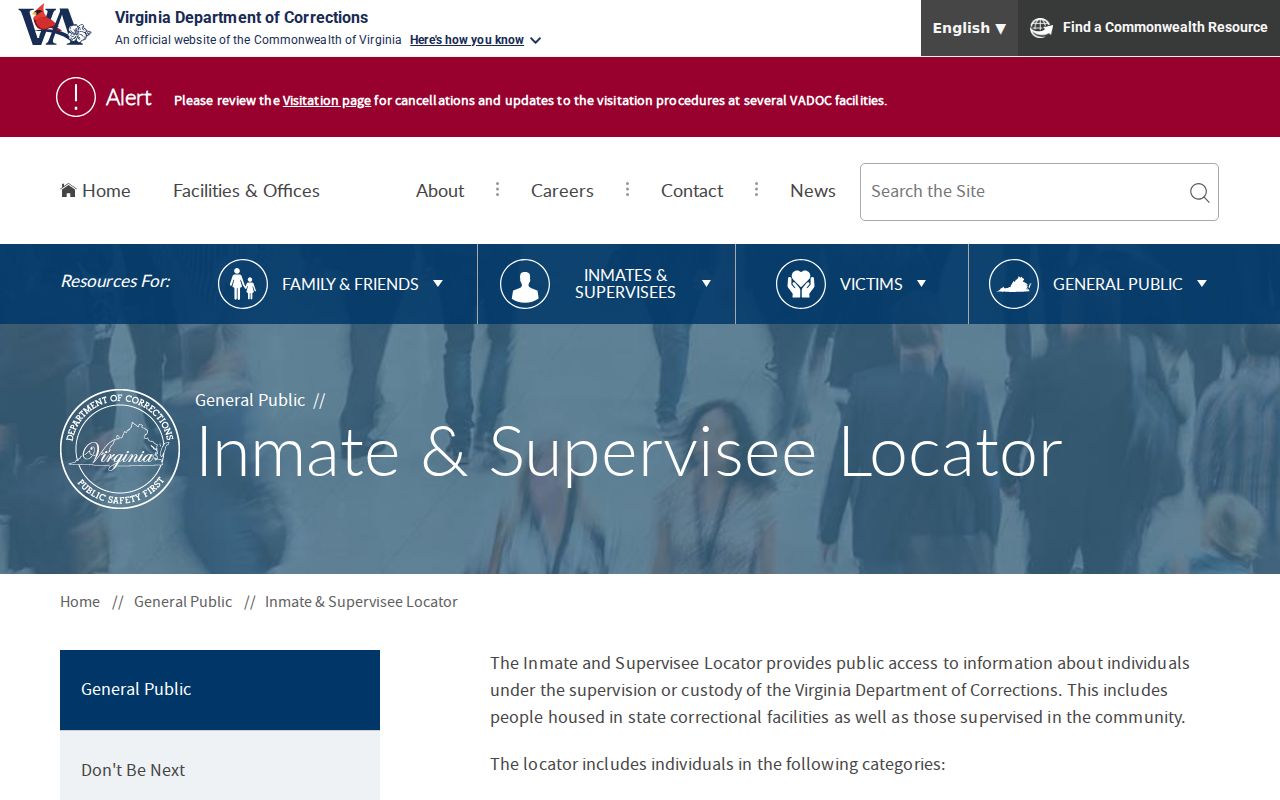
A result in a state custody or supervision system should never be read as proof of a current South Riding address or physical location.
South Riding License Name Checks
Virginia’s official license-verification routes can confirm a credential type, number, status, and source contact when that narrow question is relevant. They cannot establish that a person lives in South Riding. For a South Riding name, the same caution applies to SCC entity records: an officer, registered agent, or filing address may identify a legal role or mailing point rather than a home. Preserve the original record date and exact name variant, then return to the parcel, deed, court, or vital source that can answer the location or event question.
The official Virginia DPOR License Lookup is the source shown in this captured interface.
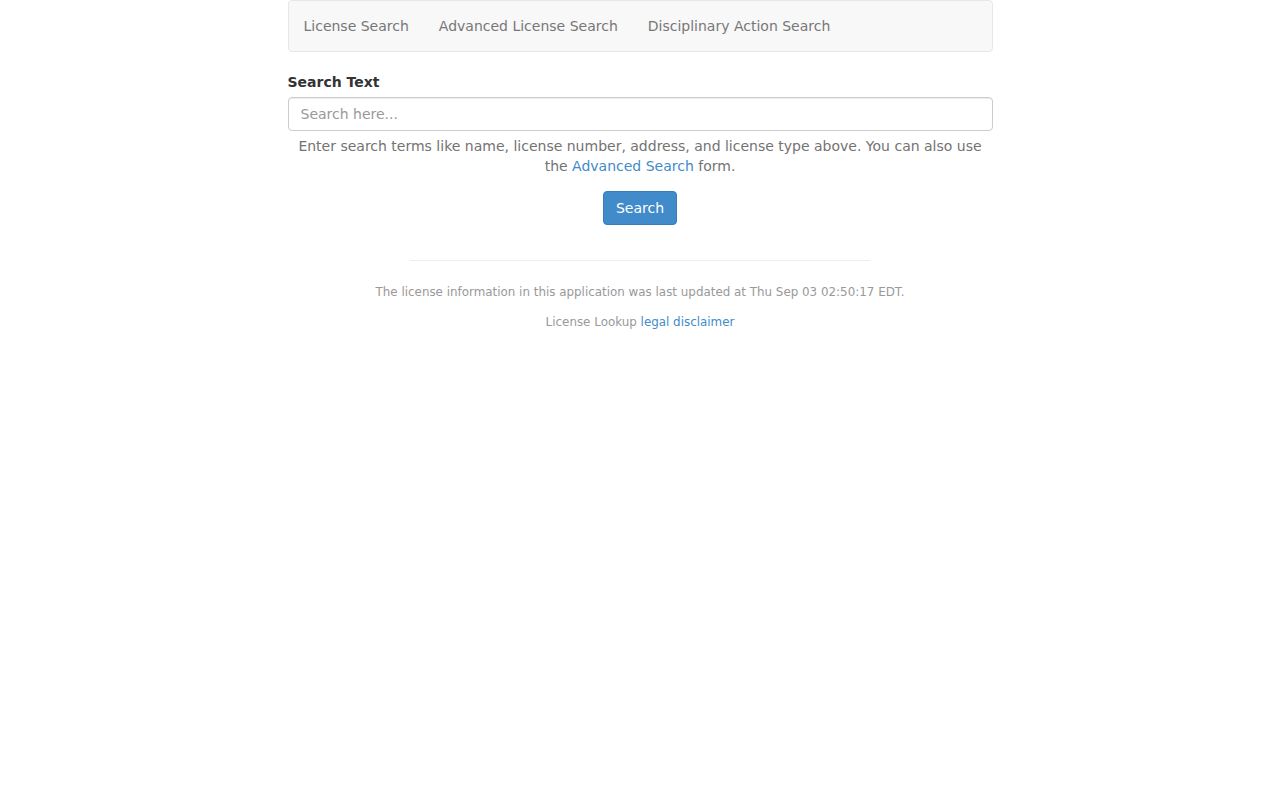
A credential result is best used as a source-specific check, never as a substitute for a residence record.
South Riding Archive Research
South Riding family history often needs a local source that is neither a current parcel card nor a court docket. Thomas Balch Library holds regional archives, a cemetery index for more than 200 local cemeteries, family files, historic-house files, census microfilm, and local databases. Its family-file finding aid describes materials from roughly 1984 through 2018, but those files are closed, unverified, and not open for additions. They are leads to evaluate, not final proof.
For a former classmate or a possible heir, compare surname variants with school or community context, newspapers, cemetery material, and public probate metadata. No verified South Riding-specific alumni directory was located. The Library of Virginia and Thomas Balch collections can help place an older county record in context, while the current parcel and deed sources handle a modern address. This human-use route keeps the research tied to a specific relationship or historical question.
South Riding Records Requests
When a public portal does not expose the needed existing record, make a narrow request to the office that holds it. A South Riding request follows Virginia’s Freedom of Information Act, which allows requests by email, mail, phone, fax, or in person, and a written request is easier to track. Describe an existing record with reasonable specificity: date range, address or PIN, record type, and requested format. An agency does not need to create a current-resident list or answer a broad research question. It may provide records, deny an exempt record, provide a partial response, state that no record exists, or invoke an allowed extension.
The ordinary response framework is five working days after receipt, excluding weekends and legal holidays, with a possible additional seven working days in qualifying circumstances. A cost estimate can pause the clock, and a deposit may be requested when projected costs exceed $200. Loudoun offers online, email, mail, phone, fax, and in-person channels through its public-records request instructions. The Virginia FOIA access provision is the governing statewide reference.
South Riding Resident Lookup Limits
A one-person record search cannot promise a complete household picture. A South Riding parcel record may show an owner, taxpayer, or mailing contact rather than an occupant. Voter information is protected and purpose-limited. DMV address data is restricted, and no public South Riding resident roster was found in the research. Virginia’s Address Confidentiality Program and protected-voter rules can suppress or substitute address information for eligible people. Sealed filings, adoption records, and other protected material do not become public because a name is entered in a search form.
If an official record has a factual error, contact the custodian with the PIN, case number, instrument number, date, and exact disputed field. A source correction is distinct from removal of a copied commercial entry. Do not reproduce protected addresses, unredacted identifiers, or sealed material. The Virginia Address Confidentiality Program statute describes the protected designated-address framework.
Lawful use. Use South Riding records for personal, lawful research and respect every access limit. Using information to stalk, harass, threaten, or intimidate another person is prohibited under Virginia law.